
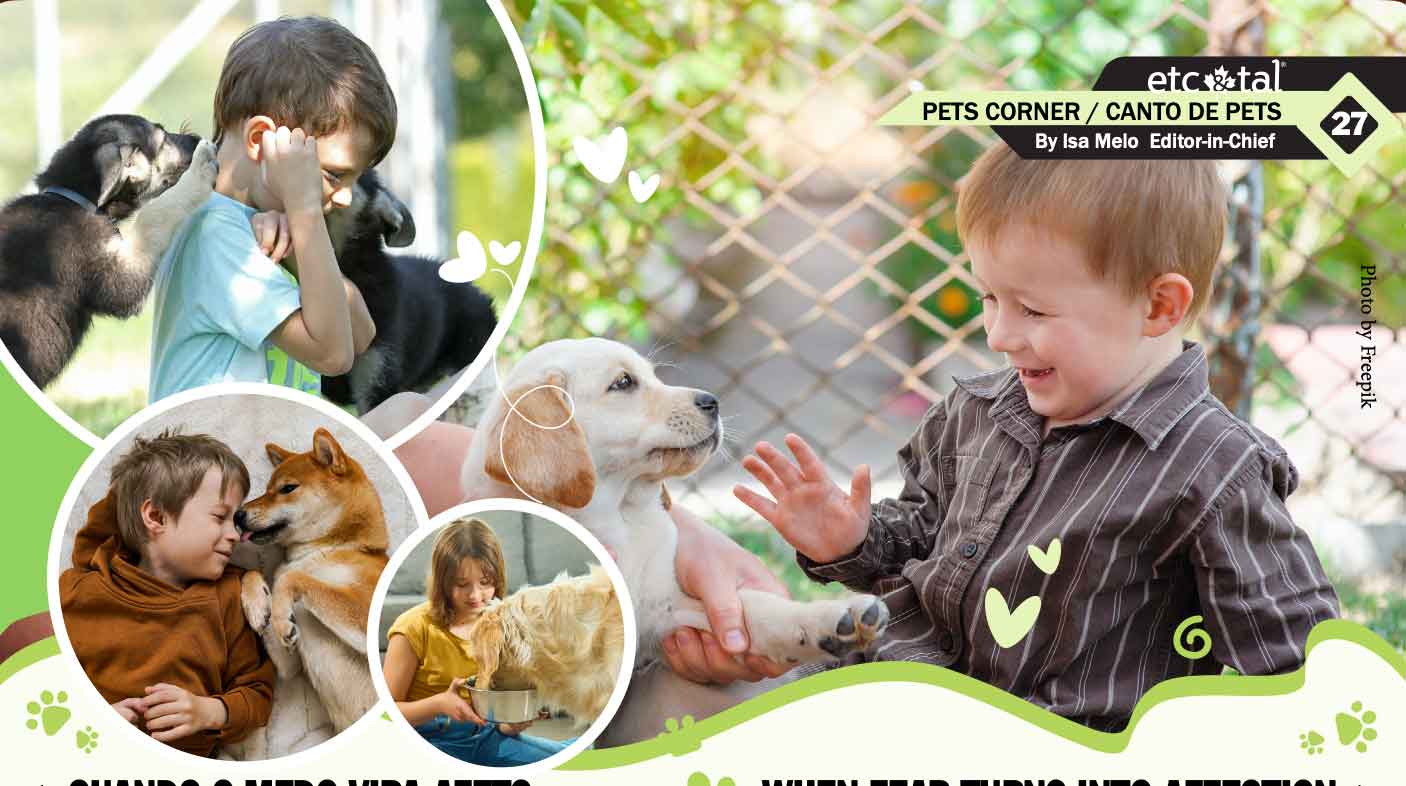
When fear turns into affection
Have you noticed how some children freeze at the mere sight of a dog or a cat approaching?
Fear of animals is more common than it seems and, in most cases, is linked to negative experiences, sudden scares, limited exposure, or even fear passed on by adults. Forcing contact is never the right approach. When a child feels pressured, fear tends to increase.
The first step is to respect the child’s pace and acknowledge their feelings. Fear should not be treated as something permanent or normalized, but understood as a phase that can be overcome. With love, a sense of safety, and guidance, children learn that they can trust, feel protected, and gradually develop courage. So how can a child begin to feel safe, little by little? Gradual exposure makes all the difference.
Observing the animal from a distance, learning about its behaviour, and understanding that it also needs care and respect help the child build confidence and feel more in control of the situation. Over time, small moments, such as watching a pet eat, play, or sleep, spark curiosity and reduce tension.
Another important factor is example. Children learn far more from what they see than from what they are told. When adults show calmness, respect, and affection toward animals, this behaviour is naturally absorbed. A bond begins to form when the child realizes that the pet is not a threat, but a safe, consistent, and trustworthy presence in everyday life.
Turning fear into affection does not happen overnight. It is a process built through patience, attentive listening, and positive experiences. Along the way, the child not only overcomes fear but also develops empathy, sensitivity, and self-confidence. In the end, the pet comes to hold a special place in the child’s life.
Pets bring joy, companionship, and affection, while also teaching important values such as responsibility, care for others, respect for boundaries, and coexistence. A relationship built with kindness can shape childhood in a positive way and leave lessons that stay with the child for life.