
REMEMBRANCE DAY KEEPS THOSE WHO SERVED CLOSE TO OUR HEARTS
When you see a red poppy on someone’s lapel, have you ever thought about the stories that small flower represents? There are farewells, letters anxiously awaited and families whose lives changed forever. These are the stories Canada preserves on Remembrance Day, November 11, honouring those who served in times of war, conflict and peace.
Behind every uniform was someone whose absence was felt at home: a son, a daughter, a father, a mother. People with dreams and plans who left without knowing whether they would return. Many never embraced their loved ones again; others came home with physical and emotional wounds that remained long after the fighting ended.
The date recalls the Armistice, the agreement that halted the fighting of the First World War and took effect at 11 a.m. on November 11, 1918. Today, at that same hour, two minutes of silence invite people across the country to pause and acknowledge the service and sacrifices of those who served.
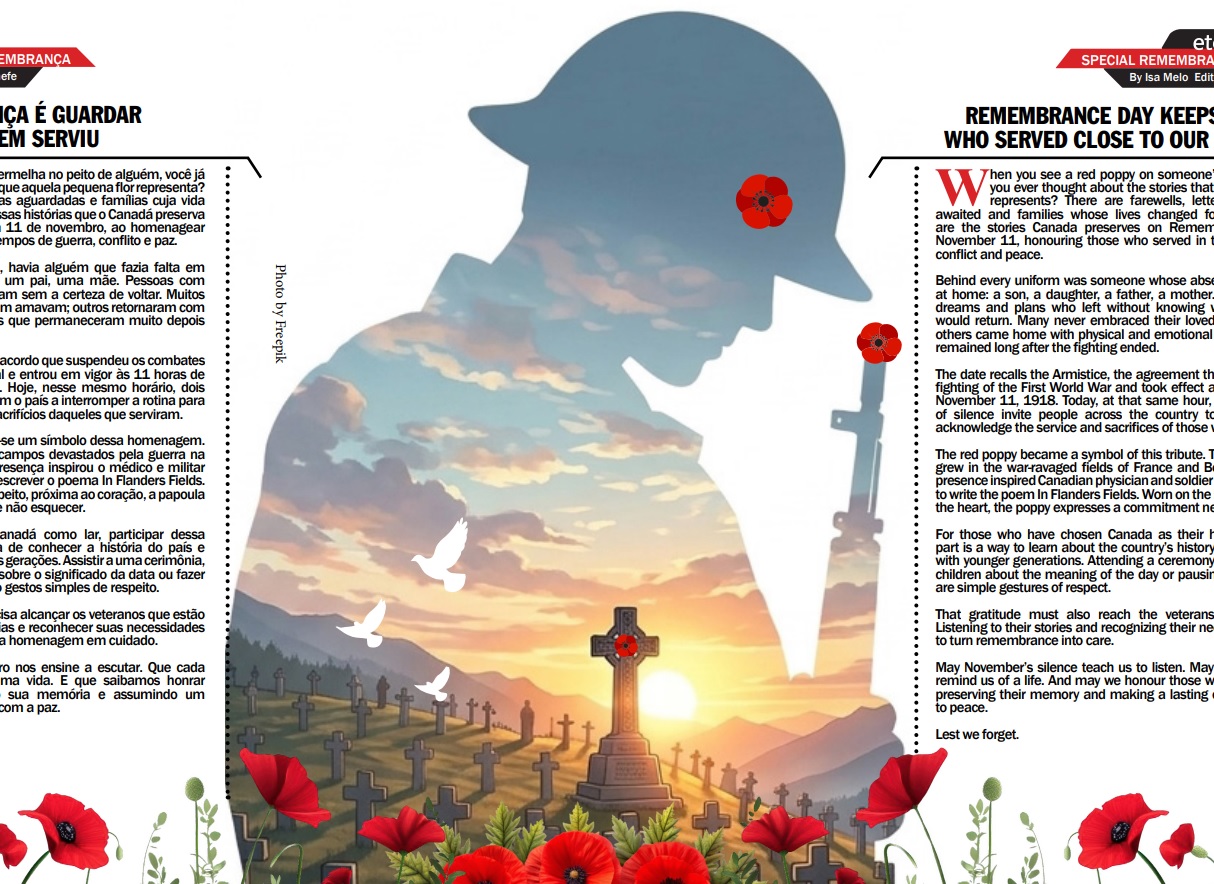
The red poppy became a symbol of this tribute. These flowers grew in the war-ravaged fields of France and Belgium. Their presence inspired Canadian physician and soldier John McCrae to write the poem In Flanders Fields. Worn on the left side, over the heart, the poppy expresses a commitment never to forget.
For those who have chosen Canada as their home, taking part is a way to learn about the country’s history and share it with younger generations. Attending a ceremony, talking with children about the meaning of the day or pausing at 11 a.m. are simple gestures of respect.
That gratitude must also reach the veterans among us. Listening to their stories and recognizing their needs are ways to turn remembrance into care.
May November’s silence teach us to listen. May every poppy remind us of a life. And may we honour those who served by preserving their memory and making a lasting commitment to peace.
Lest we forget.