
The danger of water bottles
Have you ever considered that the seemingly harmless water bottle you carry with you might represent a silent risk to your health? Whether in the car, your bag or at work, plastic containers are practical, but they are also known sources of chemical substances that can migrate into the water, especially when exposed to heat, sunlight or repeated use.
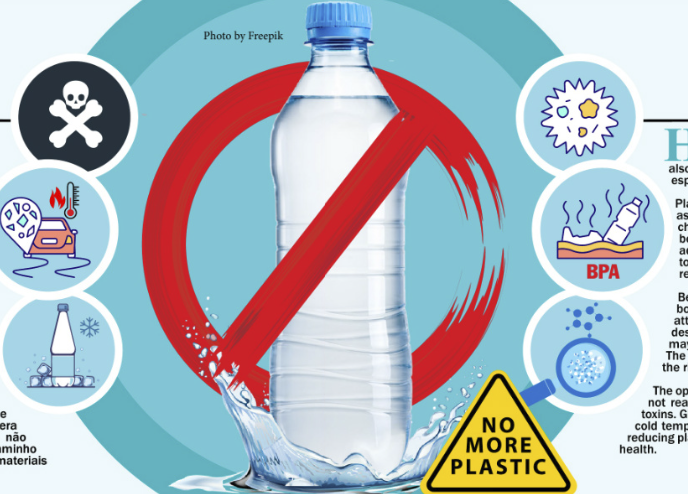
Plastic can release microplastics, BPA and phthalates, compounds associated with hormonal imbalances, increased inflammation, metabolic changes and long-term health concerns. The risk increases when bottles are forgotten in a hot car, frozen or reused for long periods. In addition, plastic bottles take centuries to decompose, contributing to environmental pollution and allowing microscopic particles to return to our table through food and drinking water.
As a result, many people have switched to thermal bottles to keep their water cold for longer. However, it is essential to pay close attention to the material. Thermal bottles made of plastic continue to present similar risks because prolonged contact between the material and the liquid can release undesirable compounds. Aluminium bottles also require caution, as their internal coating must remain intact. If there is any peeling or scratches, contamination becomes possible.
The safest alternative is a stainless-steel bottle with double-wall insulation, which does not react with water, maintains the temperature for hours and does not release toxins. Glass is also a very safe option, although it does not keep liquids cold for as long. For daily use, the recommendation is simple: reduce plastic consumption, avoid heat exposure, do not reuse plastic bottles and choose materials that genuinely protect your health.